
- Alabama
- Alaska
- Arizona
- Arkansas
- California
- Colorado
- Connecticut
- Florida
- Georgia
- Hawaii
- Idaho
- Illinois
- Indiana
- Iowa
- Kansas
- Kentucky
- Louisiana
- Maine
- Maryland
- Massachusetts
- Michigan
- Minnesota
- Mississippi
- Missouri
- Montana
- Nebraska
- Nevada
- New Hampshire
- New Jersey
- New Mexico
- New York
- North Carolina
- North Dakota
- Ohio
- Oklahoma
- Oregon
- Pennsylvania
- Rhode Island
- South Carolina
- South Dakota
- Tennessee
- Texas
- Utah
- Vermont
- Virginia
- Washington
- West Virginia
- Wisconsin
- Wyoming
How to Conduct a Delaware Business Entity Search
Page Navigator
- How to Conduct a Delaware Business Entity Search
- Allowable Entity Types in Delaware
- Why Search for a Delaware Business Entity
- How to Search for Business Entities
- Review Search Results
- What Information Can You Find with the Secretary of State?
- What Business Entity Information is Not Public
- How to Find EIN and UCC Records in Delaware
- EntityCheck Business Background Check Goes Further
- Alternative Resources Beyond the SOS (Secretary of State) Search
- How to Find the Owner of a Business Entity in Delaware
- Types of Owners and Their Roles
- Red Flags to Look for When Searching Business Entities
- Best Practices When Reviewing Business Entity Records
- How to Register an Entity in Delaware
- FAQs

According to the Delaware Division of Corporations, there are 2,157,482 business entities registered in the State of Delaware, and 81.4% of all IPOs (Initial Public Offerings) in the U.S. choose to register their companies in Delaware. Additionally, 66.7% of all Fortune 500 companies are incorporated in the state of Delaware. What makes Delaware such a popular place to form a company?
Delaware is an ideal environment for business, offering favorable corporate laws and the Specialized Court of the Chancery for corporate disputes. The court has judges who are experts in business law, resulting in faster, more consistent decisions on corporate matters.
Delaware also offers significant tax advantages, including a state corporate income tax exemption for companies that do not conduct business in the state. This business-friendly state offers flexibility, privacy for shareholders, and predictability in legal matters, making it an attractive option for investors and facilitating rapid growth.
The state's business-friendly laws and efficient filing processes also make it easier and quicker to form and manage a company. A large number of tech companies have registered in Delaware because it is easier for them to attract investors.
Allowable Entity Types in Delaware

Since business registration occurs at the state level, each U.S. state determines which types of business structures it permits. Delaware allows for a wide range of business entity types, including the C Corporation, S Corporation, Limited Liability Company (LLC), Series LLC, Limited Partnership (LP), Limited Liability Partnership (LLP), and Statutory Trust. You can also choose non-profit forms, such as the Non-Stock Company, and specialized entities, including the Public Benefit Corporation and Close Corporation. The best choice depends on your specific needs regarding liability protection, tax implications, and business goals.
The Limited Liability Company (LLC) is the most popular business entity type in Delaware, making up a significant majority of all entities formed in the state. Companies choose LLCs due to their legal and operational flexibility, limited liability for members, simplified maintenance, and the ability to customize an operating agreement. The protection and flexibility offer the best of everything.
Why Search for a Delaware Business Entity

There is no doubt that Delaware is a favored location to form a company. With so many businesses registered there, finding information on them may be easier. There exist many reasons why you might need to search for a Delaware business entity. Some of the most common reasons include:
Preventing name conflicts by searching Delaware public records to ensure the name you want to use is not already taken. This can also help you establish a strong brand identity and credibility in the business world, allowing you to create a distinct presence for your company.
Verifying an entity's legal status and compliance is crucial before entering into a partnership with them. All companies in Delaware need to appoint a registered agent to receive and serve legal documents on behalf of the business.
Checking into a company can also help you avoid fraud and non-compliance by identifying potential risks associated with fraud or a company's non-compliant status, protecting you from financial losses or legal trouble.
Some other reasons to check out a Delaware business entity are:
Checking to see if a business is in good standing.
Understanding compliance with naming rules.
Gathering information about competitors.
Conducting thorough due diligence when acquiring or investing in a business.
Performing research for lawsuits, contracts, or due diligence before any major transactions.
How to Search for Business Entities

The Delaware Department of State's Entity Search tool basically allows anyone to search a business entity using any of the following criteria:
Entity Name: Enter the business's full or partial name in the appropriate field.
File Number: If the entity's file number exists with the Division of Corporations enter it in the appropriate search field.
Review Search Results

Once you type in the preferred or available search parameter in the relevant field, click the "Search" tab on the Entity Search tool and wait for the search results. Typically, a list of records matching the search criteria, including file numbers and entity names, will be displayed.
What Information Can You Find with the Secretary of State?

When you select an entity name from the list of results returned by a Delaware entity search, you will find more detailed information about the business entity. Usually, you will see the following details:
File Number: The unique identifier assigned to the entity by the state's Division of Corporations.
Entity Name: The current name of the entity as written in their certificate of formation or incorporation, or as amended.
Entity Kind: The type of business or organizational structure.
Residency: Whether the entity is domestic or foreign.
Formation Date/Incorporation Date: The date the entity officially became a legal entity.
Entity Type: The type of entity as it is registered with the Division of Corporations. Examples include General, Closed Corp, DISC Corp, General Partnership, Bank, and Professional Association.
Registered Agent Information: The registered agent's name, phone number, address, city, state, county, and zip code.
You may also find additional information for a fee. For example, retrieving an entity's status typically costs $10, while more detailed records, such as filing history and franchise tax assessment, may incur an additional cost of $20.
What Business Entity Information is Not Public

Although a lot of information is available regarding business entities, there is also a lot that may be kept private. Some information that you will not find in public records for Delaware companies is as follows:
LLC Members/Managers: The names and details of the LLC's members or managers, along with their operating agreement, which contains ownership information, are not publicly available in Delaware.
Corporations: As of recent changes, director names and addresses are now publicly disclosed in annual reports, making them less anonymous than they were previously.
Trade Secrets: Formulas, processes, methods, or other proprietary information that derives economic value from not being generally known to the public and is the subject of reasonable efforts to maintain its secrecy.
Private Employee Medical Records: Medical and health insurance information.
Customer and Employee Identifying Information: Personally identifiable information (PII), such as Social Security Numbers, driver's license numbers, and passport numbers.
Revenue and Profit Numbers (unless a public company): Smaller companies that are not publicly traded can keep their financial data private.
Financial Data: Bank and credit card numbers, as well as loan information, remain private.
The Corporate Transparency Act (CTA) requires companies to submit beneficial ownership details, which are stored in a database. However, this information is not publicly available.
How to Find EIN and UCC Records in Delaware

To find the EIN of a Delaware company, use the Delaware Division of Corporations Business Entity Search tool to find the company's file number, then check SEC filings for public companies or the IRS tax-exempt search for non-profits. For your company's existing EIN, check your tax or business documents, such as your W-2 or 10-K, or contact the IRS directly. EntityCheck's EIN search tool makes it easy to find EIN records for a Delaware company.
To find UCC records in Delaware, visit the Delaware Division of Corporations website's UCC search page to find a list of certified UCC searchers who perform searches. Since Delaware only offers certified UCC searches, you will need to hire one of these authorized professionals to conduct the search for you. These searches are not free and will involve a fee for the debtor's name and any certified copies you may require.
You can also rely on EntityCheck to find UCC filings for a Delaware company.
EntityCheck Business Background Check Goes Further
An even more insightful way to search for Delaware business entities and access additional information is to utilize EntityCheck's powerful search engine. You can search easily by business name, EIN, owner, phone number, or email address. Along with the information above, you can dig deeper to find surprising details such as:
 UCC Filings:Discover Uniform Commercial Code (UCC) filings, showing creditors' attachment to business assets. These files provide insight into the organization's financial stability through its standing debts and resulting risk. Also find lien details, creditor and debtor information, filing and expiration dates, as well as collateral and asset claims
 Court Cases:Evaluate a company's legal record to assess potential risks associated with its operations and identify any outstanding issues. Review bankruptcy filings, liens and judgments, federal court cases, litigation, and legal history of ongoing and past court cases.
 Licenses:Verify business credentials, including licenses, permits, and government certifications, as well as the educational backgrounds of decision-makers, to assess credibility.
 Filing & Compliance:Review a company's financial performance reports, DBAs (Doing Business As), and government Tax IDs.
 Trademarks & Patents:Find out what intellectual properties a company controls and review the details of any trademarks and patents it holds.
 Registered Individuals:Identify key decision-makers, registered agents, corporate officers, and leadership, even if this information is not readily available through official records.
Alternative Resources Beyond the SOS (Secretary of State) Search
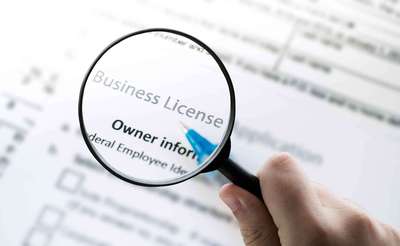
Along with the Delaware Division of Corporations, you can also find business entity information from other sources. You can often find details related to business registrations, taxes, licenses, and other filings.
Some additional resources to check when evaluating a company are the following:
Delaware Department of State: the Division of Corporations: This office handles the registration and management of business entities, including corporations and LLCs, within the state.
[Delaware Department of Insurance]: The DOI protects consumers by regulating the insurance industry in the state, ensuring that insurance companies are financially sound, promoting fair pricing and insurance availability, and educating the public on insurance matters.
[Delaware Office of the State Bank Commissioner]: The Delaware Office of the State Bank Commissioner is the government office responsible for regulating and examining state-chartered financial institutions, such as banks and trust companies, to ensure they comply with state and federal laws and conduct fair business practices.
[Delaware Division of Revenue]: Delaware's Division of Revenue is the state agency responsible for collecting taxes.
[Delaware Department of Labor]: The Delaware DOL helps people find jobs and provides vast resources to assist employees and employers.
County Clerk's offices for finding fictitious business names (DBA) records.
Chambers of Commerce to find ownership details and legislation that the company may be involved in advocating for or against.
EntityCheck for a deeper dive into a company's background and ownership details.
How to Find the Owner of a Business Entity in Delaware

To find the owners of a Delaware business, start with the free public search tool on the Delaware Division of Corporations website. You can find basic information, such as the registered agent's name and address. The registered agent is the official point of contact for the business and may be able to provide information or direct you to the right person.
For Delaware corporations, the names of directors must be listed on the Annual Franchise Report, which is a public record. For Limited Liability Companies (LLCs), ownership is not publicly available due to Delaware's privacy protections for LLCs. Check a business's website to see if they have a "team" or "leadership" page listing its owners. If you cannot find an owner through public channels, you can always contact the company directly and ask for assistance or hire a professional, such as a private investigator.
Additional Resources for Business Ownership Info
Chambers of Commerce
Local and state Chambers of Commerce maintain directories of member businesses, sometimes including ownership or representative details.
Better Business Bureau (BBB)
The BBB provides customer-focused reports and reviews on businesses, sometimes including information on business owners.
Public Records
Dozens of public records, including business licenses, court filings, and property records, may list ownership or responsible parties.
Professional Associations & Trade Groups
Many industries have associations that maintain directories and share information about member businesses.
Types of Owners and Their Roles

In Delaware, business owners are categorized by the entity they form, with roles typically involving shareholders/stockholders (in corporations), members (in LLCs), and partners (in partnerships). Their roles include ownership, voting rights, electing directors, managing the business, and receiving profits, with the specific responsibilities varying by entity type and defined in governing documents.
Here's a breakdown of owner types and their roles by Delaware business structure:
Delaware Corporations
Shareholders (or Stockholders)
- Role: They own the corporation by purchasing stock, which grants them voting rights to elect the Board of Directors and influence major corporate decisions.
Directors
- Role: Directors set the strategic course for the corporation, make major decisions, and oversee the conduct of the officers.
Officers
- Role: Officers, such as presidents and secretaries, manage the day-to-day operations of the business and are hired and fired by the Board of Directors.
Delaware Limited Liability Companies (LLCs)**
Members
Role: Members are the owners of the LLC. They can also serve as managers or delegate management to others.
Liability: Members are typically protected from personal liability for the company's debts.
Managers
- Role: Managers, who can be members or non-members, are designated to manage the business and affairs of the LLC.
Delaware Partnerships**
General Partners
Role: They manage the business affairs as outlined in the partnership agreement.
Liability: General partners are entirely liable for all business debts and obligations.
Limited Partners
Role: Limited partners have limited management rights.
Liability: Their liability is typically limited to their investment in the business, providing them with some protection from business debts.
Delaware offers flexibility, allowing one person to hold multiple roles (e.g., as a sole shareholder, director, and officer) in a small corporation. The specific roles and powers of owners are generally detailed in the governing documents, such as the partnership agreement for partnerships or the operating agreement for LLCs.
Different entity structures have various roles and types of ownership. Some individuals who have control over a company may not hold a traditional role within it. Leadership is a crucial factor to understand before working with a company.
Red Flags to Look for When Searching Business Entities

Red flags when evaluating a Delaware business entity include a lack of a professional website, failure to verify the entity's status on the Delaware Division of Corporations website (showing it is inactive or suspended), a history of negative online reviews or lack of a positive online presence, an unclear business plan, lack of a registered agent in Delaware, potential tax complications from operating in multiple states, and a history of non-compliance with state regulations. Some red flags and the details to watch out for are below:
⠀
Public Presence and Reputation

No Professional Website: The absence of a professional website or online presence can make it challenging to find information or assess the business's legitimacy.
Negative or No Customer Reviews: Poor online reviews or a complete lack of customer testimonials can be a sign of problems. Be wary.
Lack of Community Engagement: Companies that show little interest in their local community, particularly those operating in their home state, may be using Delaware incorporation primarily to limit liability rather than for genuine business growth and development. Look deeper before engaging with them.
History of Non-Compliance: A company with a record of failing to meet state filing requirements or regulations should be viewed with caution.
Entity Status Problems

When checking the Delaware company registration, look for an 'inactive' or 'suspended' status. This is a major red flag, indicating that the company may be either out of business or facing penalties for its business practices.
Check with the Delaware One Stop Business Licensing and Registration Service online system to verify business licenses to ensure they are in good standing and active. If the business requires a specialized professional license, verify with the Division of Professional Regulation that the company's licenses are up to date.
An LLC or corporation in Delaware must have a registered agent with a physical address in the state to receive legal documents. The absence of one is a serious issue. Additionally, if you find a Certificate of Resignation for a registered agent and a new one has not been appointed within 30 days, something is wrong. It also means they cannot receive legal documents and may be trying to avoid legal process.
Inconsistent or Suspicious Information

Be very careful of partnering with any company if you notice their business name spelled differently in various places or in different versions. Be cautious of frequent changes in the address or registered agent, as this may indicate instability or an attempt to evade service of lawsuits. If the company has no physical address, only a P.O. box, be wary.
Many Delaware companies operate under Trade Names. DBAs are registered with the Delaware Division of Corporations. Although there is nothing inherently wrong with it, some companies in Delaware may use a DBA to conceal information about their owners or activities. Be sure to check for registered DBAs.
Ownership and Management Concerns

Since ownership of businesses in Delaware may not be readily available, you might have to dig deeper to find out who owns the company. If their records do not clearly indicate who owns it, or if members appear to be fake rather than genuine individuals, that could suggest some form of fraud or other criminal activity. Frequent turnover in leadership positions also suggests serious problems. Hidden ownership, especially in high-risk industries, is also a significant concern, indicating possible drug trafficking or money laundering. Consider skip tracing or other methods of background checks to learn as much as possible about the individuals running the company.
Financial and Legal Warning Signs

Other signs that a Delaware company is in financial or legal trouble include a lack of a detailed business plan, budgets, or clear goals. Delaware businesses may face dual state taxes (those of Delaware and their home state), which can negate any perceived tax benefits and create additional filing requirements.
If a company is incorporated in Delaware but has no physical presence or operations there, it can suggest an attempt to avoid taxes or accountability.
The Delaware Attorney General has sought to dissolve 15 companies for criminal activity in 2019, and in August 2025, ICE was investigating 15 Delaware businesses for employing undocumented immigrants.
Delaware courts, particularly the Court of Chancery, handle a wide range of business litigation, including corporate and fiduciary duty disputes like merger challenges and books and records demands, commercial contract disputes in the Superior Court's Complex Commercial Litigation Division, shareholder litigation such as class and derivative actions and appraisal actions, and other matters like business torts, intellectual property disputes, and real estate litigation. Be sure to check the courts thoroughly for any frequent or ongoing legal issues before engaging with a Delaware company.
Compliance Gaps

Compliance is another serious issue, and any missing or incomplete pieces could indicate poor management or fraud. Look for missing operating agreements or bylaws. Is the company a foreign entity that is not properly registered to do business in the state? Be sure to verify that when dealing with professional industries, such as law firms, medical practices, or financial companies, they are operating under a PLLC/PC status if required. Verify public records to ensure the business has filed all the necessary paperwork.
Business Purpose and Industry Red Flags

Delaware is one of the few states that allows Public Benefit Corporations. These entities must state their purpose in their official formation paperwork. If the company claims one thing but engages in activities that do not align with its stated purpose, this could be a significant red flag, indicating potential criminal activity or fraud. Some red flags that may indicate trouble here include a sudden change in industry classification or the presence of high-risk industries (such as crypto, cannabis, or money transfer companies) without visible licenses.
Connections & Affiliations
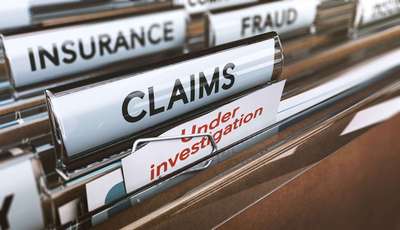
To cover all your bases, cross-check owners/officers with other entities. Sometimes one person runs multiple dissolved/failed companies. Look for repeat patterns of dissolutions followed by new formations. That is a significant indicator of potential fraud. Something to watch out for is a company with connections to organized crime figures and politically exposed persons (PEPs).
Some red flags in broader business records include the following:
Inconsistent Public Records
Company filings don't match what's listed in:
Court records
Tax records
Property ownership filings
An example of this is that the registered address differs from the address in lawsuits or liens.
Poor Record-Keeping
Missing meeting minutes (for corporations).
No updated ownership/member list for LLCs.
Lack of transparency in accounting records.
Regulatory Issues
Fines, sanctions, or loss of licenses with state agencies.
Businesses flagged by the Better Business Bureau or the Attorney General's office.
Unusual Patterns
Very recent incorporation with sudden high activity.
Foreign entities registered but not compliant with local laws.
Shell-company indicators (multiple entities tied to the same registered agent at the same address).
Best Practices When Reviewing Business Entity Records

Use the best practices outlined below to maximize the benefits of your research. A business background check can take time, but it can yield a wealth of information that could help you avoid any costly mistakes.
Cross-reference everything.
Compare the UCC filing data with records from litigation and bankruptcy courts. Look for discrepancies between the documents.
Check annual reports for consistency year-over-year.
Research the owners of a company to detect possible bankruptcies, felonies, fraud, and other legal issues that could affect your business.
Use business verification services or business background reports from EntityCheck.
Keep in mind the context. For example, a single lien may not be alarming, but multiple filings, lawsuits, and frequent leadership turnover together signal real risk.
How to Register an Entity in Delaware

Regardless of the type of business entity, the following steps are generally required to set up or form a business entity with the Division of Corporations under the Delaware Department of State:
Determine your chosen business entity type. The Legal Business Structure Table provided by the state's Division of Revenue and the Registration Process Flow Chart can help you with a basic overview of your entity choices.
Contact a Delaware registered agent and inform them of the intention to set up or form a business entity. You can also use someone you know and trust who has a Delaware address.
Perform a business entity search to determine that your chosen name is available and that no other company has registered it. Ensure that your name is distinguishable from any other business entity. Afterward, you may reserve the name online or in writing.
File and submit the appropriate Formation Forms and certificate of incorporation using the Delaware Division of Corporations' Document Filing and Certificate Request Service. These documents may also be submitted by mail to:John G. Townsend Building, 401 Federal StreetSuite 4, Dover, DE 19901
File an annual report and /or pay franchise tax after incorporation. If listed as an exempt domestic corporation, tax payment is not required, but an annual report must be filed.
Below is a list of different business structures that may be registered in Delaware and the applicable formation fees:
Limited Liability Company (LLC) - A $90 formation fee and an optional $50 - $1,000 expedite fee. Similarly, there is a $75 fee for a business license and state tax registration. Additional fees may apply depending on the type of license.
Corporation - An incorporation fee of $89 and a $9 fee for extra pages. There is an optional fee of $50 to $1,000 for expedited services and an additional $75 for the first business license.
Non-Profit - An incorporation fee of $89, as well as $9 for extra pages. If required, an expedite fee of $50 to $1,000 applies, depending on the urgency of the applicant's request. In addition, a $275 or $600 IRS fee applies.
When naming your Delaware business, you must follow the state's strict guidelines. Every state has specific rules regarding the naming of a new company. Typically, the name cannot be too similar to an existing company name, as this may infringe upon that business's rights. The Delaware business name rules that you must follow include:
The name you choose must be available. Before registering, you must perform a Delaware name availability check to ensure the name is available for use. This is an essential step.
Your chosen name must not be identical or confusingly similar to any existing business name on file with the Delaware Division of Corporations.
Your chosen name must also include a corporate suffix (entity indicator) to show the type of business entity it is. Some examples are Corp., Corp, Corporation, Inc., Inc, Incorporated, Limited Liability Company, LLC., LLC, Association, Company, Foundation, Institute, and Limited.
You get to choose whether your business name has punctuation. There is no requirement forcing you to use a comma before your suffix. It's all up to you.
Delaware restricts the use of certain words in business names. If you want to use one of these words, you must get special approval from a Delaware executive. Some of the restricted words are bank, trust, university, college, and insurance.
Names cannot contain words that are misleading, discriminatory, or suggest a false association with the government.
The name cannot be devised to deceive the public about the business's purpose.
It must not facilitate, incite, or foster any criminal act prohibited under Delaware law.
The name must not incite hate crimes, drug abuse, fraud, assault, or terrorism.
Your Delaware business name cannot be obscene or libelous.
FAQs
- How do I look up who owns an LLC in Delaware (members vs. managers)?
Delaware is known for its robust privacy protection, which is what makes it attractive to LLCs. You generally cannot look up the owners (members) or managers of a Delaware LLC through a public search because Delaware has strong privacy laws and does not require this information to be disclosed in formation documents or annual reports. You may find a list of registered entities using the Delaware Division of Corporations' online search, but it will not provide ownership details. The best option is to contact the company or its registered agent and request the information. You can also try an EntityCheck search, which could provide you with much more detailed information that you find useful.
- How can I find a corporation's officers and directors in Delaware?
To find an officer or director of a Delaware corporation, use the Delaware Division of Corporations' website to search for the entity by name or file number, then pay a fee to obtain detailed information, which includes the names and addresses of the directors and at least one officer. For publicly traded companies, you can also find this information, along with more details, by searching the SEC's EDGAR database. Additionally, Delaware law requires all corporations to file an Annual Franchise Report each year, listing the directors and at least one officer.
- Are business owners' names public or private in Delaware?
It depends on the type of business structure. With public companies and corporations, you can easily find owners' names by checking public records, annual reports, or the SEC database. In Delaware, the names of LLC (Limited Liability Company) members and corporate shareholders are private. They are not required to be disclosed on public records when forming the business, retaining owner anonymity. Personal privacy is a significant reason why business owners choose to form LLCs in Delaware.
- Where do I search official business records in Delaware?
You can search official Delaware business records by visiting the Delaware Division of Corporations website and using the Business Entity Search tool to find information on businesses by name or file number. Free basic information includes the entity's name, file number, formation date, and registered agent. For more detailed information, such as current franchise tax status and detailed filing history, you can pay a fee for a corporate status search. You can also find out much more about a business by using EntityChecks's robust Delaware search engine, which combines government data with other invaluable sources and provides robust searches with insightful results.
- How do I check if a business name is available or reserved in Delaware?
To check if a business name is available or already reserved in Delaware, visit the Delaware Division of Corporations' online business entity search tool at Delaware.gov. Enter your desired name into the search tool, ensuring you exclude suffixes like "LLC" or "Inc." from your search for a comprehensive result. The tool will display a list of matching or similar names if they are already in use.
- How can I view recent filings (Articles, amendments, mergers, annual/biennial reports) for a company in Delaware?
To find basic information on a Delaware company's recent filings, use the search tool on the Delaware Division of Corporations website. Then use the Corporate Status, or Document Filing and Certificate Request Service to obtain more detailed information or certified copies of specific documents for a fee. When using this service, you can obtain more detailed information, including the current franchise tax assessment and filing history, or request certified copies of documents such as articles of incorporation, amendments, or annual reports.
- How do I get a Certificate of Good Standing/Existence in Delaware?
To obtain a Delaware Certificate of Good Standing, you can use the Division of Corporations' Document Filing and Certificate Request Service to submit your request electronically. You will need to provide your company's legal name, a return mailing address, and a contact phone number. You can also order by mail using a Certification Request Memo. Fees are $10 for entity status and $20 for more detailed information.
- How do I obtain certified copies of formation documents and amendments in Delaware?
To obtain certified copies of formation documents and amendments in Delaware, you must submit a written request, typically by mail or fax, to the Delaware Department of State's Division of Corporations. You will need to provide the exact name of the entity, a statement specifying the documents needed, and your mailing address. You can also use a Delaware-registered agent or a private corporate services company to handle this process; they may offer expedited service for an additional fee.
- How do I search UCC (Uniform Commercial Code) liens against a company in Delaware?
To search for Delaware UCC liens, use the Delaware Division of Corporations' online UCC Filing System to search by the company's name, paying attention to variations and former names. The state provides a search tool where you can enter the debtor's name and retrieve information on filed claims. For official copies of documents or more complex searches, request them from the Secretary of State. Another option is EntityCheck's Delaware Business Entity Search.
- What are the steps to register an LLC in Delaware (forms, fees, timeline)?
The basic steps to register an LLC in Delaware are to pick a name, choose a registered agent, file a Certificate of Formation, pay the $110 filing fee, create an operating agreement, and obtain an EIN. Standard processing is 1–3 weeks, with expedited options available. LLCs must pay a $300 annual franchise tax.
- What are the steps to incorporate (C-Corp/S-Corp) in Delaware?
To form a C-Corp or S-Corp, choose a business name, appoint a registered agent, and file a Certificate of Incorporation. After filing, hold an organizational meeting, appoint directors, create bylaws, issue stock, obtain an EIN, and comply with applicable regulations.
- Do I need a registered agent in Delaware, and who can serve as one?
Yes. A registered agent is required for all LLCs and corporations formed in Delaware. The agent must have a physical Delaware address and be available during business hours. You can act as your own agent, appoint someone else, or use a commercial registered agent service.
- What annual reports, franchise/margin taxes, or license renewals are required in Delaware?
Delaware corporations must file an Annual Report and pay franchise taxes by March 1. LLCs and LPs must pay a $300 annual franchise tax by June 1. All entities must maintain a registered agent. Businesses must also renew their general business licenses annually or every three years via Delaware One Stop.
- How long does state approval take in Delaware, and are expedited options available?
Delaware approvals take a few days to several weeks. Expedited options include 1-Hour, 2-Hour, Same-Day, and Next-Day Service, with fees ranging from $50 to $1,000+. Expedited filings completed before cutoff times may be processed within minutes or hours.
- Do I need to foreign-qualify to do business in Delaware if my company is formed elsewhere?
Yes. If your company is formed outside Delaware but conducts business there, you must foreign-qualify by submitting the required form and a Certificate of Existence from your home state, and appointing a Delaware registered agent.
- What activities count as "doing business" in Delaware?
Delaware considers the following as doing business:
- Maintaining a physical office
- Hiring employees
- Owning property
- Opening a bank account
- How do I file a DBA/fictitious business name in Delaware, and is county/city filing required?
File a DBA through the Delaware One Stop portal by submitting the Registration of Trade, Business, & Fictitious Name Certificate. County/city filings are no longer required. The fee is $25.
- How do I change my company's name, address, officers, or members in Delaware?
File a Certificate of Amendment for name or registered agent address changes. Changes to owners, officers, or members are internal matters governed by bylaws or operating agreements and do not need to be reported to the state.
- How do I reinstate or revive a company that's been administratively dissolved in Delaware?
Pay all outstanding fees and taxes, then file a Certificate of Revival or Renewal and Revival. The revival fee is $200 for LLCs and about $169 for corporations.
- Do I need to file Beneficial Ownership Information (BOI) with FinCEN, and how does that interact with Delaware filings?
No. BOI reporting is no longer required for U.S. companies or U.S. persons as of March 26, 2025. Delaware filings remain separate and required.
Page Navigator
- How to Conduct a Delaware Business Entity Search
- Allowable Entity Types in Delaware
- Why Search for a Delaware Business Entity
- How to Search for Business Entities
- Review Search Results
- What Information Can You Find with the Secretary of State?
- What Business Entity Information is Not Public
- How to Find EIN and UCC Records in Delaware
- EntityCheck Business Background Check Goes Further
- Alternative Resources Beyond the SOS (Secretary of State) Search
- How to Find the Owner of a Business Entity in Delaware
- Types of Owners and Their Roles
- Red Flags to Look for When Searching Business Entities
- Best Practices When Reviewing Business Entity Records
- How to Register an Entity in Delaware
- FAQs